

You’ve heard of melanin.
It’s the pigment that gives your skin, hair, and eyes their color, and it’s produced by specialized cells known as melanocytes. We all have melanin, just in varying amounts.
So, what causes skin to lose pigment (or its ability to produce melanin) after surgery?
During surgery, an incision cuts through multiple layers of skin. The body’s priority then becomes to heal and close that wound. It’s not necessarily to return the skin exactly as it existed before.
Collagen is produced to bridge the damage, and scar tissue is created. During these processes, damaged melanocytes take a backseat. Pigment only returns if the melanocytes surrounding the injury survive or if enough functional melanocytes remain that can, essentially, repopulate.
If they are able to successfully regenerate or repair, the result is a gradual change in pigment. It’s one reason a new scar can continue changing color for many months as it matures.
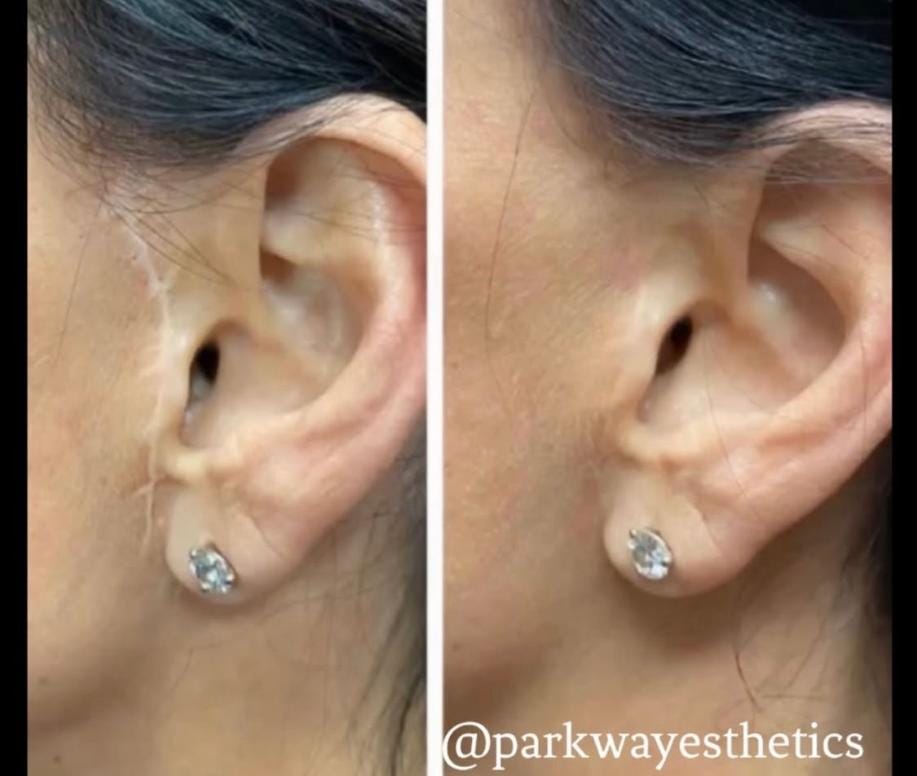
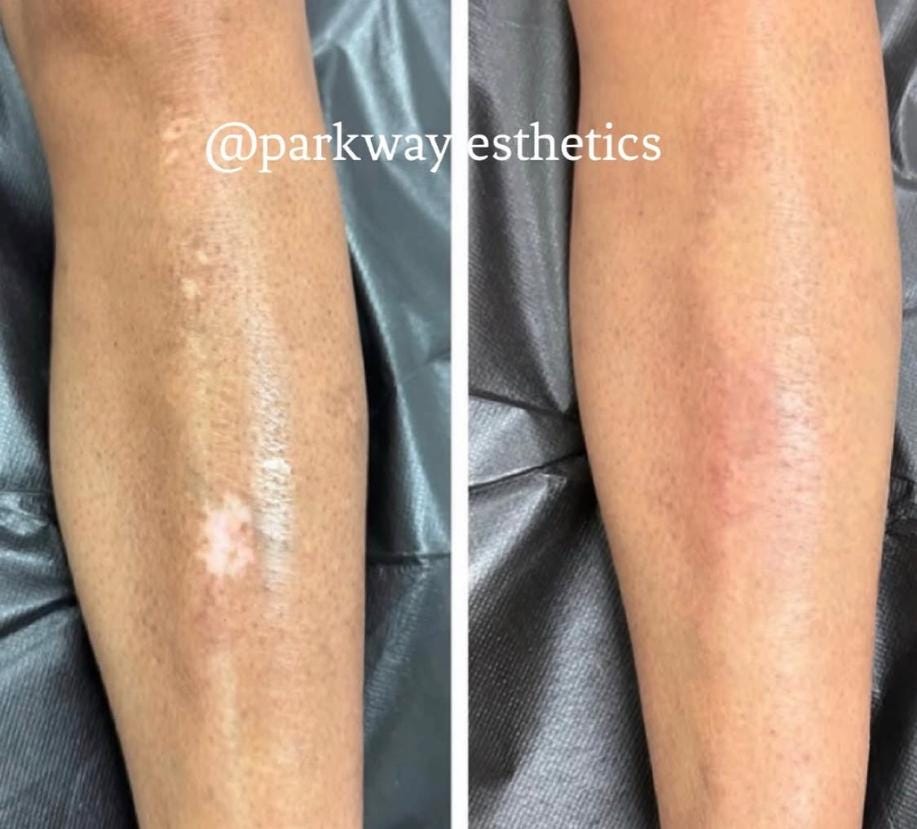
But when melanocytes have been severely damaged or destroyed, the scar may be permanently left with significantly less pigment than the surrounding skin. This is known as hypopigmentation. When pigment is completely absent, that loss is called depigmentation.
The skin itself can heal, even when its pigment-producing cells do not fully recover.
Can it be fixed?
First, when we’re dealing with hypopigmentation, it’s imperative to wait until a scar has fully matured. Scar maturation can take at least 12 to 18 months, and color may continue improving during that period.
If hypopigmentation persists, treatments via light therapies, fractional (skin resurfacing) lasers, microneedling, and other methods may stimulate melanin production depending on why it was lost in the first place.
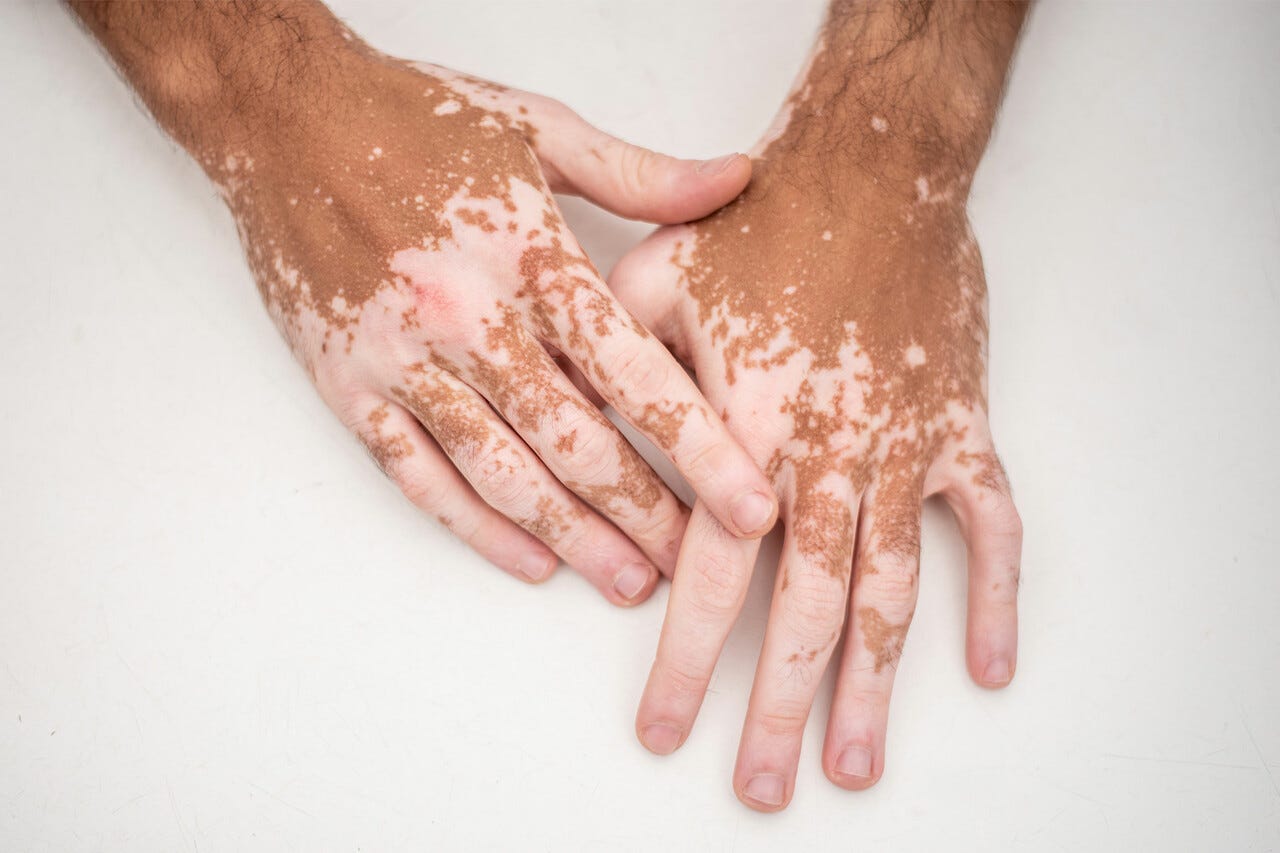
For example, topical steroids can possibly be an appropriate treatment if the loss of pigment was due to vitiligo, psoriasis, or other skin conditions. These will not be helpful on a healed, white surgical scar.
The “why” determines the correct approach.
Of course, there is never a guarantee that stimulation will restore pigment to a scar with severely compromised pigment-producing capacity.
Which leads us to scar camouflage…
When a scar is mature, stable, flat enough to tattoo safely, and remains noticeably lighter, then paramedical tattooing, or scar camouflage, becomes an excellent option.
There’s a misconception when treating scars with tattoo camouflage that EVERY scar will require skin-tone matching. That’s simply not the case.
Only when pigment is lost and cannot be restored naturally do we match skin tone. Obviously, we cannot restore melanocytes with tattooing, BUT we’re applying that missing pigment via ink to recreate that seamless appearance and blend the scar into the surrounding skin.
When left with hyperpigmentation, where the skin is darker due to an excess of melanin, a different approach is taken. The focus is on lightening the scar, not piling color on top of it.
Our skin is excellent at repairing itself, but can ultimately fall short.
When pigment is lost, the first question should always be why.
Is the skin still healing?
Are there functioning melanocytes present?
Is repigmentation possible, or has the loss become permanent?
The answers determine treatment. The good news is, there’s always an option.