
What's New at Tonic Skin Lab
Another Hat to Wear...


One of the things I’ve been up to recently is starting an apprenticeship under one of the top scar camouflage providers in the U.S.
It’s something I’ve been curious about for years,… I still have a vivid memory of seeing paramedical tattooing featured on one of the popular “Ink” shows back in the mid-2000s.
Even then, I was fascinated by the idea that tattooing could be used not just for art, but to help restore confidence.
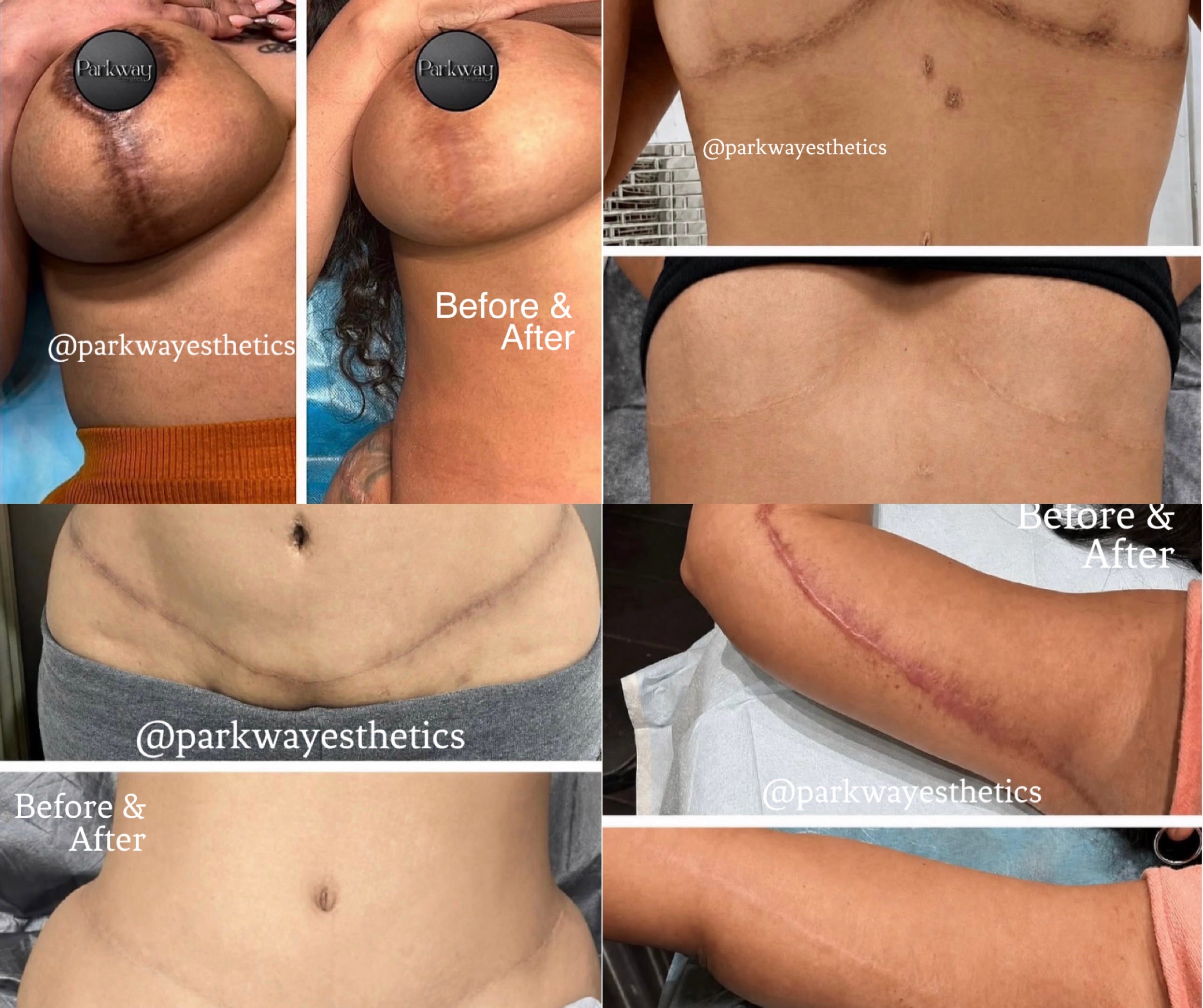
As I earned my Advanced Esthetician license and eventually underwent surgery myself, my interest in this scar treatment option only grew stronger. I always assumed this wasn’t something one could just easily study or practice; you had to already be a full-fledged tattoo artist.
That’s only half right. While you do have to complete the same requirements as a traditional tattoo artist, a long history of creating large-scale artwork or decorative tattoos isn’t a prerequisite. Of course, a solid understanding of color theory and technique is essential, but many practitioners come from backgrounds in esthetics, nursing, or other medical and cosmetic fields.
Personally, I thought it was the perfect pairing.
So… What is it?
Scar camouflage, or paramedical tattooing, is a service designed to help blend lighter scars or areas of discoloration into the surrounding skin tone. The goal is to soften the contrast so it appears less noticeable.
Quick Disclaimer: Scars are not flaws, they’re not “wrong,” and they do not need to be “fixed.” They can stir all kinds of emotions and bring us back to certain events in our lives. Or they can serve as a reminder of what we’re capable of. Whether you choose treatment or choose to embrace your scars exactly as they are, both decisions are equally valid.
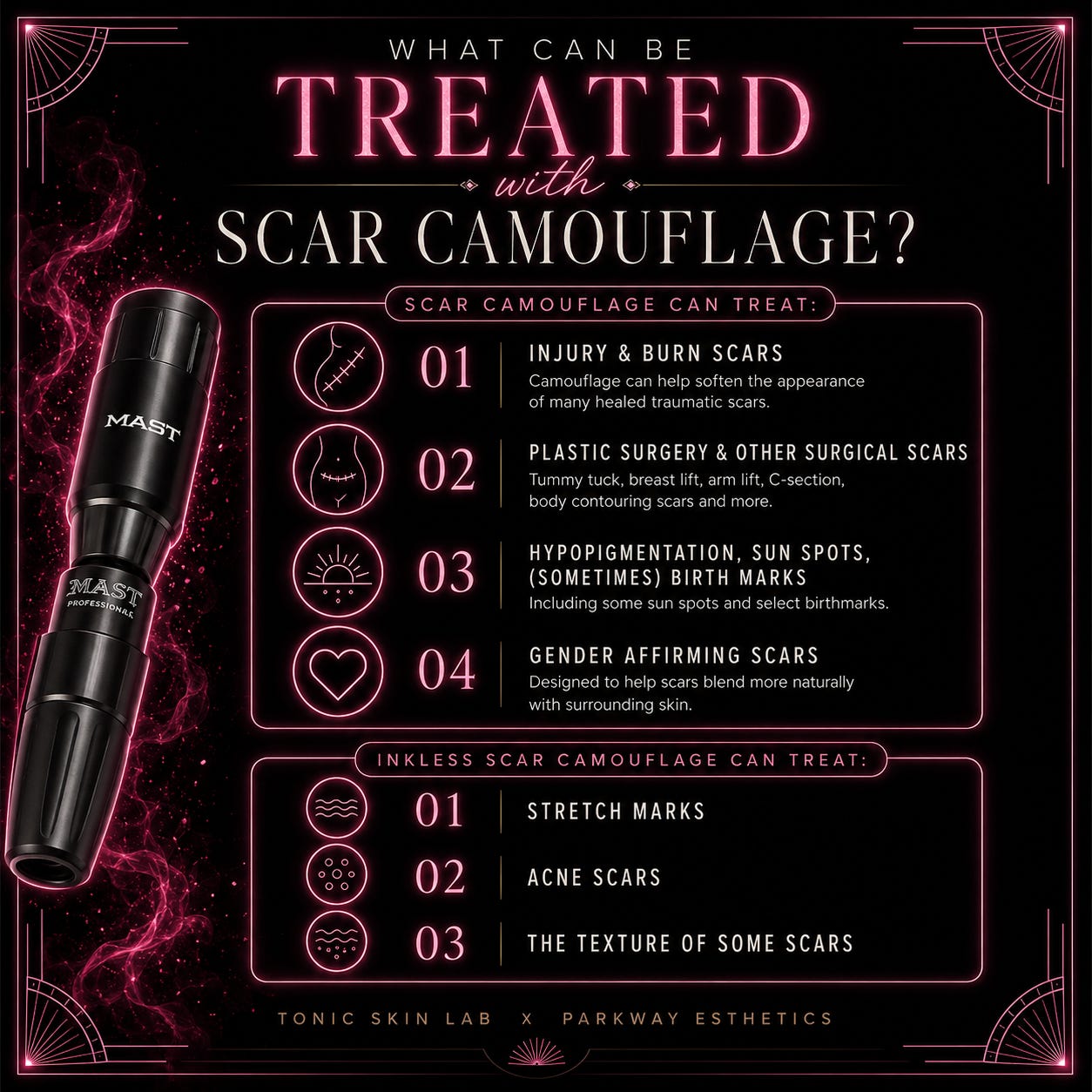
What Can Be Treated With Scar Camouflage?
Injury and burn scars: Accidents, trauma, burns, and other injuries can sometimes leave behind lighter or uneven areas of skin. Once fully healed, these scars may be candidates for camouflage.
Plastic surgery and other surgical scars: Scars from tummy tucks, breast lifts, arm lifts, C-sections, body contouring, and other procedures are the most commonly treated and see incredible improvement.
Hypopigmentation, sun spots, and some birthmarks: Areas lacking pigment may be improved by carefully color-matching and implanting custom pigment into the skin.
Some birthmarks may be treatable, but this depends on color, texture, size, and overall skin behavior. The risk is that it won’t ultimately hold the ink long-term.
Gender-affirming scars: Top surgery and other gender-affirming procedure scars are also common candidates for scar camouflage.
What is Inkless Camouflage?
Inkless scar camouflage creates micro-injuries in the skin, much like in micro-needling. There’s no ink; it works hand in hand with medical-grade serums designed to rebuild damaged tissue, brighten discoloration, and deeply hydrate to improve texture, tone, and skin quality.
Inkless treatments are used for:
Stretch marks: Mature, silvery white/light-colored stretch marks that are ideally sunken or raised. Must no longer be red or purple.
Acne scars: Certain textural acne scars may benefit from inkless work.
Pro tip: Sometimes, a session of inkless treatment is incorporated if a client is getting their scar treated, but is either unhappy with (minor) texture issues, OR is not retaining pigment. The latter is due to the scar being too fibrous or formerly necrotic.
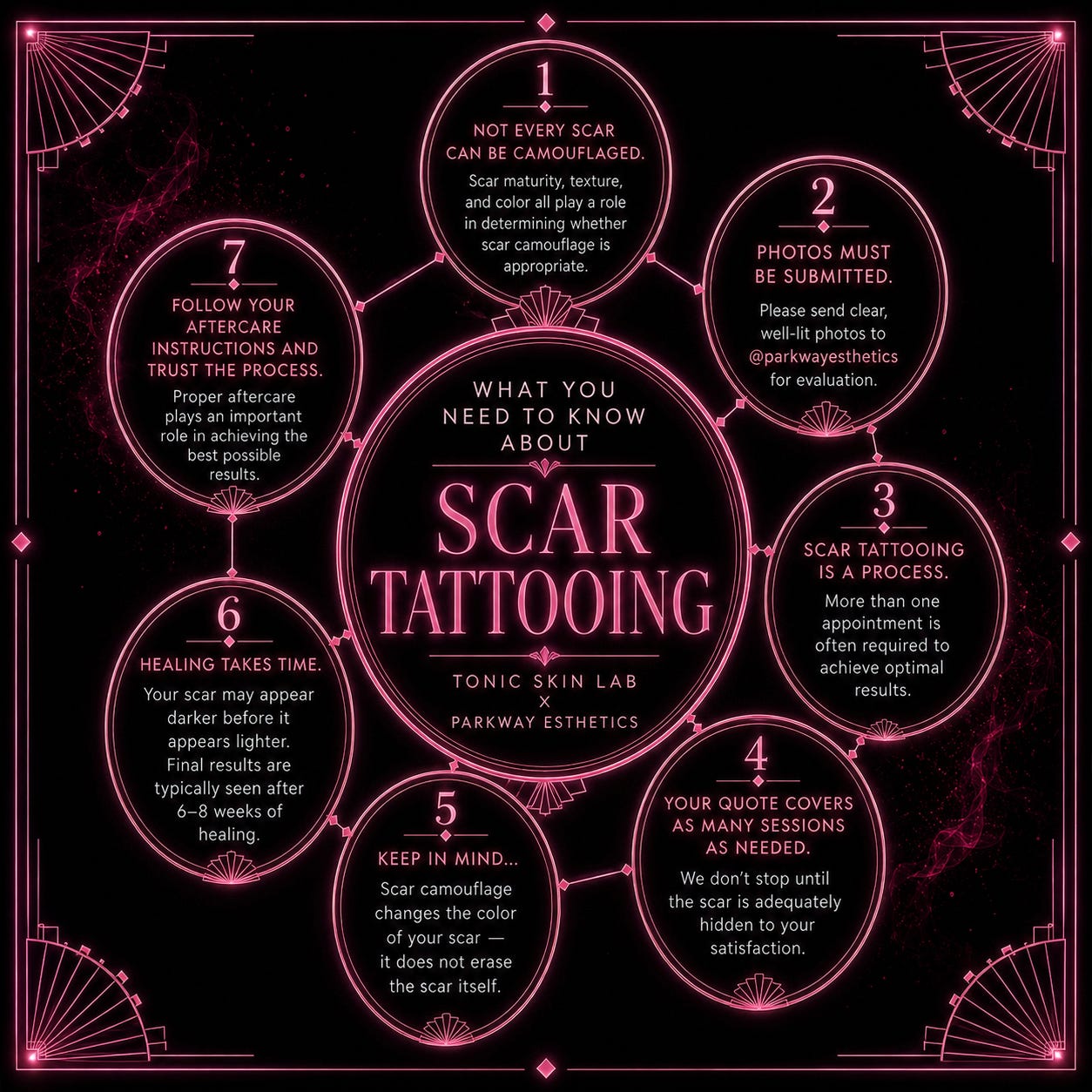
I include this infographic to explain to clients the before, during, and after of their sessions. Obviously, it’s customized to where I currently apprentice, but the information regarding the number of sessions, healing, and the aftercare is universal.
Every scar is different, which means every treatment plan and approach will be different.
Not every scar can be camouflaged: Scar maturity, texture, color, and your skin’s healing response all play a role in determining whether camouflage is appropriate. Raised, active, or unstable (still changing) scars may not be ready yet.
Photos may be requested of you: For Parkway Esthetics, photos must be submitted beforehand, but many providers will either ask for clear photos taken in natural lighting or give a free in-person consult.
This allows the scar to be evaluated and helps determine whether camouflage, inkless work, or waiting longer may be the better option. It also serves as a record of your “before.”
Rarely will a scar only need one treatment session. Most scars will need 3 to 5 sessions for adequate coverage that satisfies both client and provider, but could require quite a few more. Pigment can heal lighter, softer, darker, warmer, or cooler, depending on the skin, so sessions are spaced out to allow full healing to determine if adjustments need to be made.
Keep this in mind when choosing who to go with. Paying per session can get costly very quickly. I prefer the business model of a flat rate, as it keeps everyone honest.
Keep in mind: Scar camouflage helps reduce color contrast, but it does not erase the scar itself, and it will not significantly improve texture.
If a scar is raised (not quite keloided, as those cannot be safely treated), indented, or very rough/bumpy, that texture will still be visible and may cause shadowing even after the color is blended.
Healing takes time. It is normal for a scar to look darker before it looks lighter. Final results are typically seen after about 6 to 8 weeks of healing, which is why patience is important.
Sometimes, even better results can be achieved with longer pauses between appointments (think: 3 months)
Aftercare matters. Proper aftercare plays a major role in getting the best possible results. Following instructions, cleaning the area, avoiding sun exposure, and allowing the skin to heal properly all help protect your outcome.
Not following the given aftercare can cause zero pigment retention.
Paramedical tattooing is continuing to grow, and I’m happy to be a part of that. Whether you’ve lived with your scar for years or had surgery to treat one concern, but ended up with a new insecurity, there are now options.