


You may have heard of Inkless Tattooing recently, as a treatment for scars and stretch marks. But despite the buzz, I’m finding many still don’t know what it actually does.
What Is Inkless Tattooing?
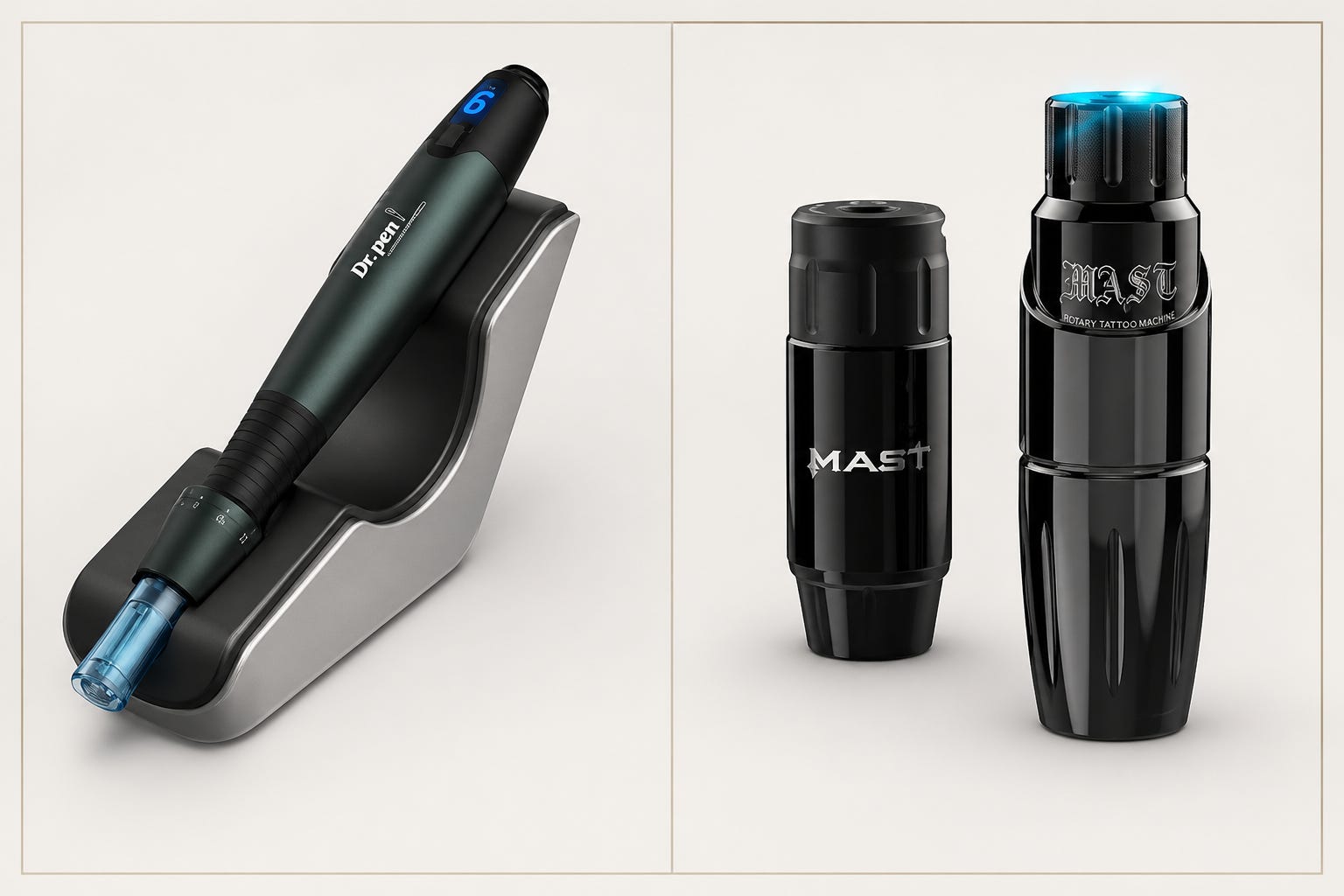
Inkless tattooing uses a tattoo machine without pigment to create controlled micro-injuries in the skin.
Instead of depositing color, hydrating serums with skin-repairing ingredients are used.
These are worked into the skin during the process to support healing and regeneration. When done correctly, it can meaningfully improve the appearance of certain types of scarring.
But Wait… Isn’t That Just Micro-Needling?
These two treatments are similar, but not the same. With inkless tattooing, a tattoo machine is used, with even finer needles than those on a microneedling pen.
Both treatments promote collagen production and the body’s natural wound healing response, but inkless can target very specific scar tissue, while microneedling is best for larger areas.
What Types of Scars Can It Help?
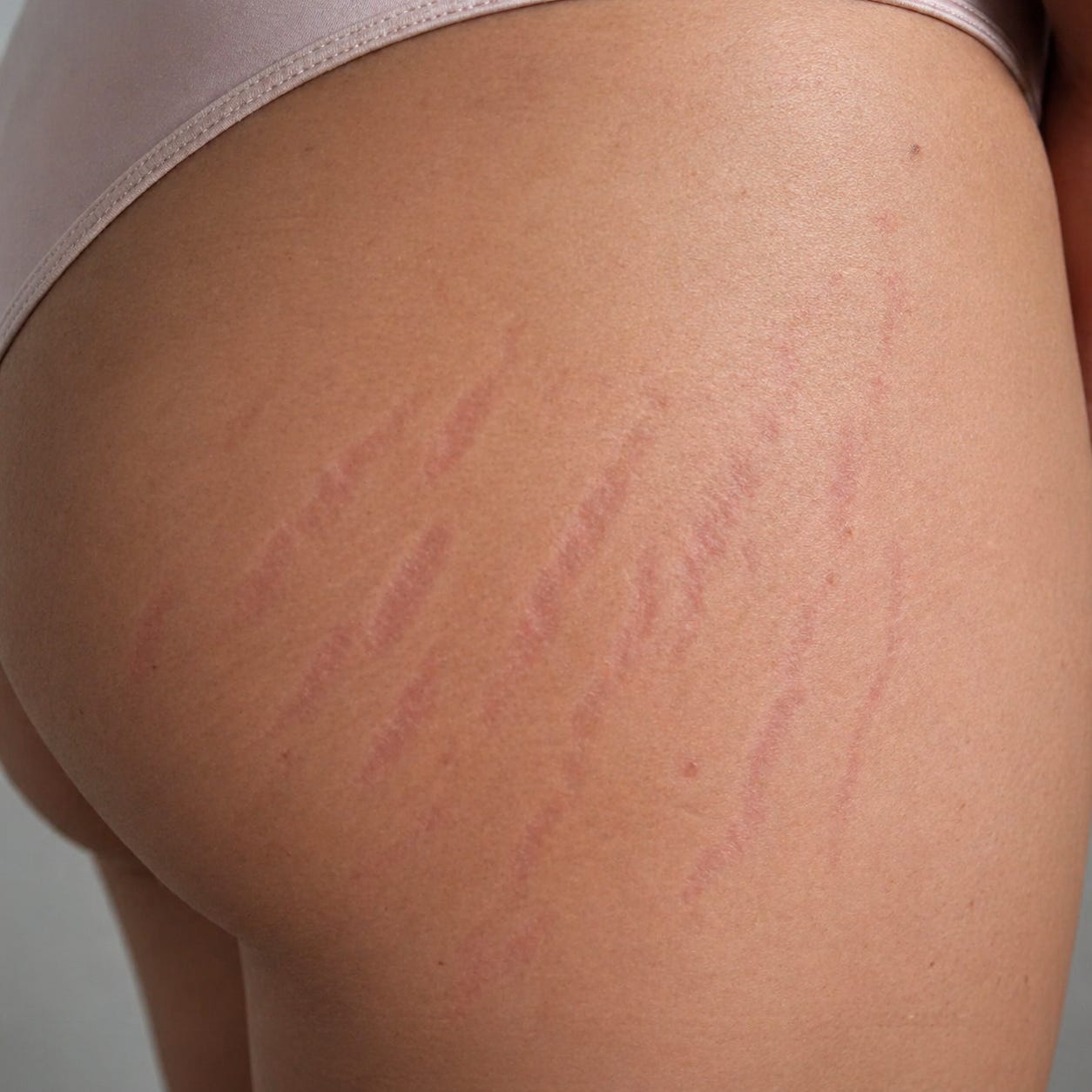
Inkless tattooing tends to work best on skin that is fully healed but still shows a visible texture change. Most commonly, stretch marks or flat, mature scars.
When the skin is a good candidate, results are typically subtle but still noticeable. Texture will appear smoother, the area may feel slightly tighter, and you’ll see less contrast between the scar and surrounding skin.
Inkless tattooing should be avoided if you have:
Keloid or raised scars
Active inflammation
Recently formed scars
Open or compromised skin
What Ingredients to Look for in a Serum
Hydration is KEY! You want to look for something water-binding that will keep tissue hydrated during the healing phase, such as Hyaluronic Acid, Glycerin, or Sodium PCA.
This is essential for collagen rebuilding.
Next, look for ingredients like Ceramides and Squalene that will provide skin barrier support and prevent TEWL (trans-epidermal water loss).
Reduce any inflammation with calming additives such as Vitamin B5, Allantoin (removes dead cells and heals sensitive skin), Centella Asiatica (a natural herb that is excellent for post-procedure care), and Aloe.
And finally, Peptides, Zinc, and Fibroblast Growth Factors (fibroblasts are a type of cell that help form connective tissues and secrete collagen. This is something you want to stimulate!) When it comes to Growth Factors, be mindful of cheaper ingredients sourced from overseas versus those developed in reputable labs.
How Many Sessions?
The good news?
You can get away with fewer treatments than you’d need with microneedling. Unfortunately, the typical treatment plan still involves 3 to 6 sessions. Results are gradual and build over time. They won’t be immediate.
The general guideline is to space sessions out every 6 to 8 weeks, as collagen rebuilding happens within its own skin cycle.
Is This Trend Worthy of the Hype?
I’d say so. Like many things in the beauty industry, this can be a powerful tool in skin restoration, but only in the right hands. It should be left to those who take the time to train, experiment with what works best, and truly perfect their technique.
If this is a service you’re interested in, seek out a consultation with an experienced professional in your area. I’m also happy to answer any questions you have along the way, as I am undergoing training to provide this treatment.