


Over the last week, I’ve been wildly humbled.
I learned some things I kind of already knew, including one important lesson that I’m grateful not to have learned the hard way (and with money still in my pocket): Appreciate what you have while you have it.
I also learned that your treatment room is not just where you put a bed or chair. Next to skill and know-how, it’s one of the biggest parts of your business.
The privacy, lighting, cleanliness, noise level, accessibility, the way a client feels when they walk through the door, even the walk through the parking lot from their car… how many times have you been turned off to a business by one or more of those things?
It all becomes part of the experience you’re selling, whether you intended for it to or not.
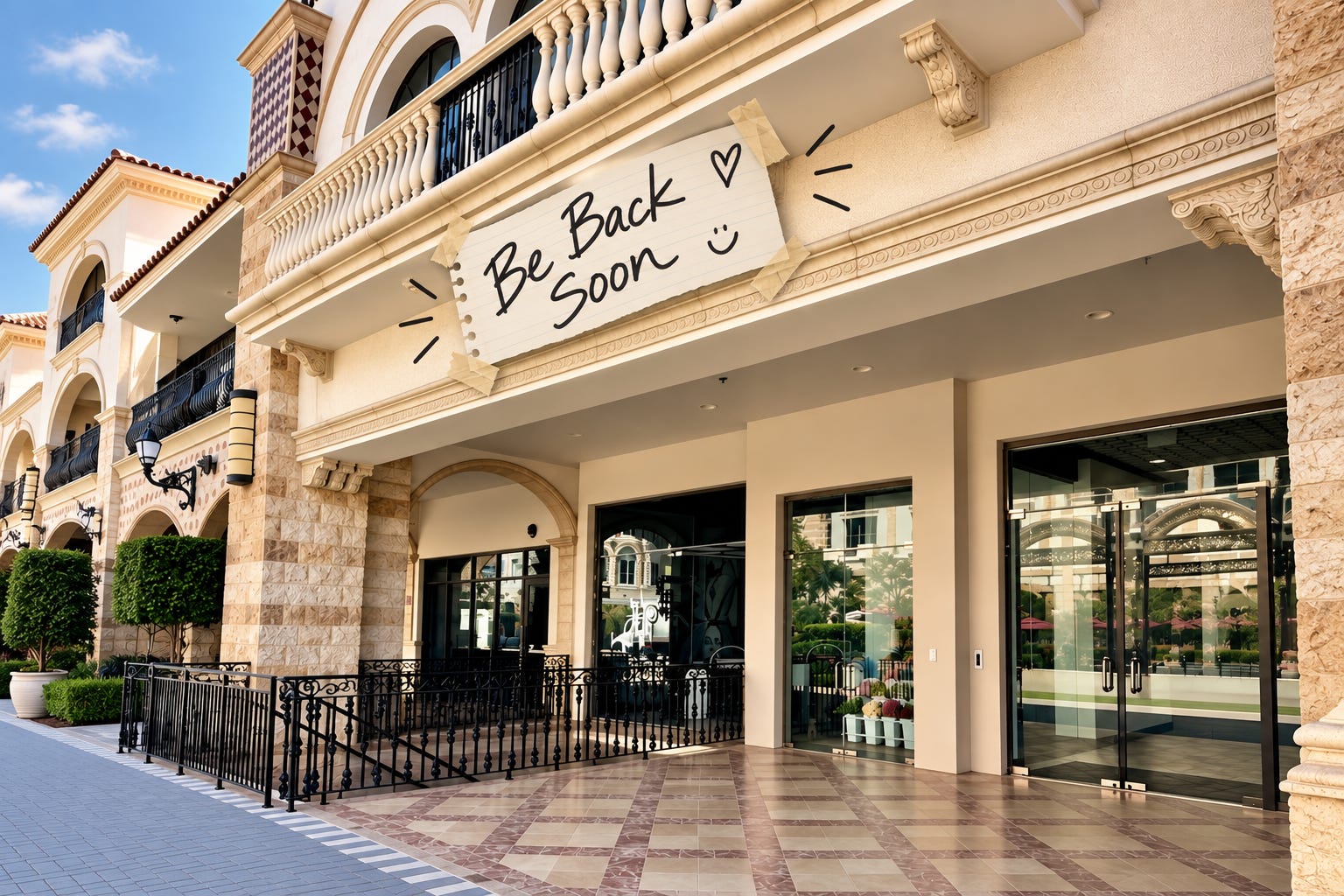
I learned that quite abruptly when the space I’ve been working out of became unavailable with essentially no warning.
One Wednesday morning, we all found ourselves locked out. Equipment, supplies, and personal belongings were inaccessible. Appointments were still in the books, and clients were still coming, but we had nowhere to treat them. In our case, some had traveled across the U.S. to be here, so this was no simple “reschedule and buy some time” situation. We needed a solution, and a good one.
Without naming names or including identifying details, this was ultimately the result of one person’s business practices affecting dozens of independent business owners.
Fortunately, another local salon owner graciously offered temporary rooms to a handful of tenants almost immediately. It was an incredibly generous gesture, but walking into a makeshift treatment room that Wednesday afternoon made me realize just how good we’d had it. Gone were our organized shelves, our supplies, our setup, and the environment we’d become accustomed to working in.
I appreciated having any accommodation on such short notice, but it wasn’t ours. It wasn’t to the standard I was accustomed to, and it wasn’t what I wanted for our clients.
I don’t exactly take kindly to disruption and disorganization, especially when they interfere with routines and to-do lists I’ve meticulously gotten down to a science after feeling so completely out of my element at the beginning of this apprenticeship.
The strange part is that I probably had less to lose than almost anyone.
I don’t hold the lease. I don’t pay the rent. I haven’t spent years building a business around that address, and I don’t have a huge book of clients whose relationship with me depends on that location. I’m just an apprentice.
Of everyone affected, I should theoretically have been the one to shrug and say, “Well, that sucks. Call me when it’s worked out.”
Instead, I was genuinely disheartened by the whole thing.
Not only because we lost the space, but because I slowly realized something else:
Apparently, nobody was particularly surprised. That part bothers me.
The beauty industry is much smaller than it looks from the outside. Las Vegas as a whole is, too. People know people, and you don’t typically get very far here without having an “in.” Artists, estheticians, hairstylists, and colorists move between studios. Tenants talk. Clients talk. Vendors talk. Former employees definitely talk.
We’re usually taught to dismiss a lot of that as gossip, and sometimes that’s exactly what it is. One angry former employee doesn’t establish a pattern. Neither does one pissed-off client, a negative Google review, or a business relationship that went south.
There are two sides to plenty of stories, but there’s also a difference between gossip and pattern recognition.
As everything started unraveling, I realized that perhaps “suddenly” wasn’t quite the right word for what had happened to us. The lockout was sudden. The circumstances leading to it weren’t.
The person running the space already had a reputation, and I don’t mean in a vague “some people didn’t like her” sort of way. I had heard stories about previous beauty businesses that failed, talk of past investigations involving regulatory boards, complaints about how the business was being run, and criticism of where the priorities seemed to be. People joked about money-where was it going? Basic issues weren’t being addressed, but there was apparently a budget for gaudy decor.
And these weren’t warnings everyone dismissed as ridiculous.
People believed them.
People continued working there while openly talking about how badly they thought the business was being run. Some seemed to fully expect that eventually, something would happen.
And then they... stayed!?
That’s the part I still can’t wrap my head around. How many times do you have to touch a stove before you believe it’s hot?
There were even things happening immediately before the lockout that are difficult not to think about in retrospect. I personally watched large pieces of artwork being removed from the space in the days beforehand. At the time, I didn’t know what it meant, although I suspected something was in the works.

Then came the lockout.
Yet one of the sentiments I kept encountering afterward was some variation of: We knew she was like this. That has bothered me almost more than the closure itself.
Because if you knew the stove was hot, why was your hand still on it?
I get it. I don’t want someone else deciding who I like, trust, or do business with because they had a bad experience. A reputation isn’t proof. BUT a reputation is information, and it usually didn’t materialize out of thin air. You can be a perfectly fine person while still being god-awful at business. Or you can be pretty terrible overall and also run a business into the ground.
There’s another uncomfortable part of this that I don’t think we talk about enough in any industry, and that’s: association matters.
Where you work matters. Who you choose to do business with matters. Who you trust with your clients, your money, and your professional reputation matters.
You can personally be ethical, talented, and professional while attaching your name to an operation that isn’t. Clients don’t necessarily understand all of the complicated relationships happening behind the scenes. They don’t know who holds the master lease, who subleases from whom, who controls the money, or which business technically belongs to which person.
They see the building. They see the business name. They see you working there. Fair or not, some of that association falls on you too.
Maybe that’s why this bothered me so much despite having comparatively little invested in the space? I don’t want chaos and bad business practices to become so familiar that I stop reacting to them, and I definitely don’t want to knowingly attach my business or my name to someone whose professional reputation I would be embarrassed to inherit.
In the end, we’ll be back in that previous location sometime in the coming weeks. New management will take over, the doors will reopen, and the space will once again feel like somewhere we’re proud to bring our clients.
I know I’m certainly going to appreciate it more when we get back…
I don’t think the lesson here is to believe every rumor you hear. It’s much simpler than that.
When enough people tell you the stove is hot, you don’t always have to burn your own hand to find out.