

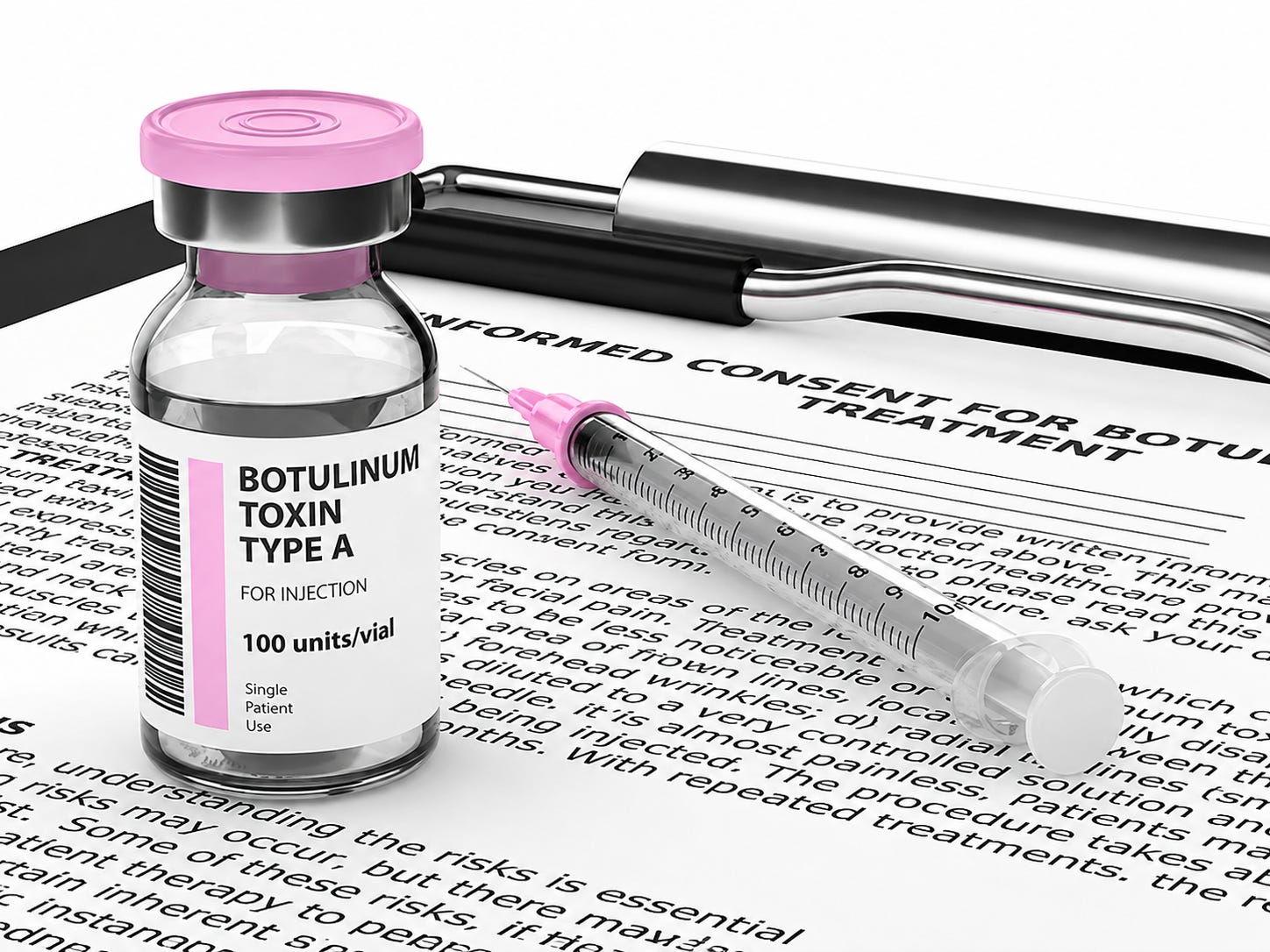
I’ve discussed the many scar treatment options that are available today, and the latest one that’s gaining steam after additional published studies: Botox!
The original idea behind using Botox was largely about mechanical tension. When it comes to a healing incision, tension + pulling can contribute to wider, more noticeable scars.
This is especially important on the face, where the muscles underneath are constantly moving. Smiling, frowning, talking, and squinting can repeatedly pull on a fresh wound. Since Botox already works by temporarily relaxing those muscles, researchers wondered: What if Botox could reduce that constant pulling while an incision heals?
How does it work?
So there are actually two ways in which Botox is being used to treat scars. It’s being studied and used to help prevent or reduce hypertrophic scarring and keloid formation, particularly in people who are prone to it, and it’s also been used to treat existing hypertrophic scars and keloids.
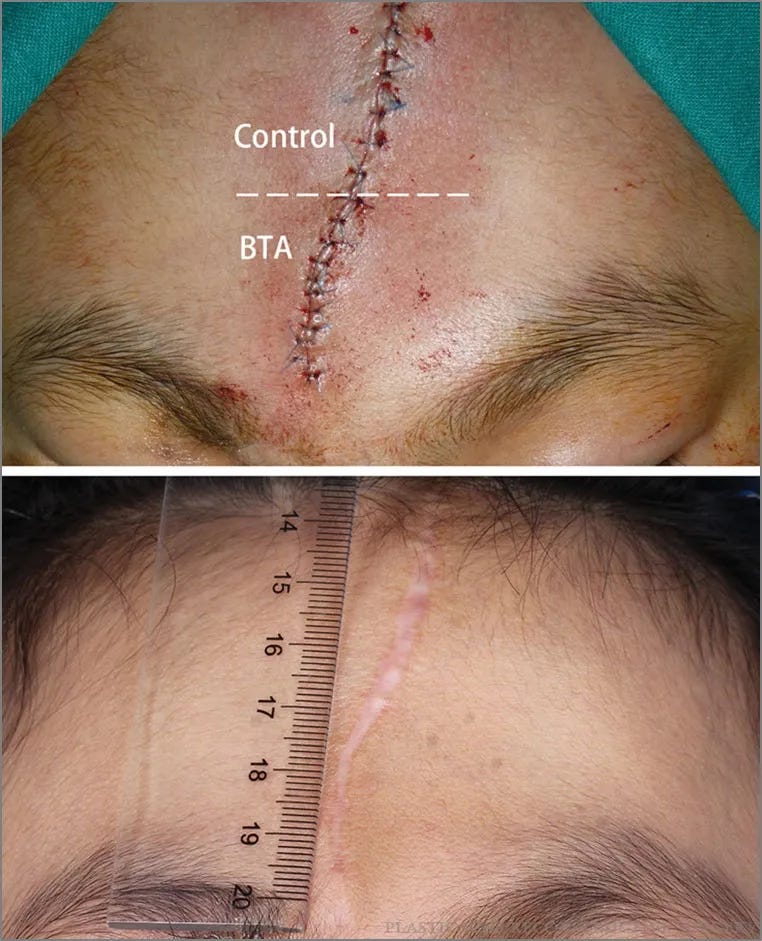
For fresh surgical scars, the approach has been small injections made along both sides of the incision/wound, typically into the surrounding tissue or underlying muscle. The goal is to temporarily weaken the pull across the incision to create less tension while healing.
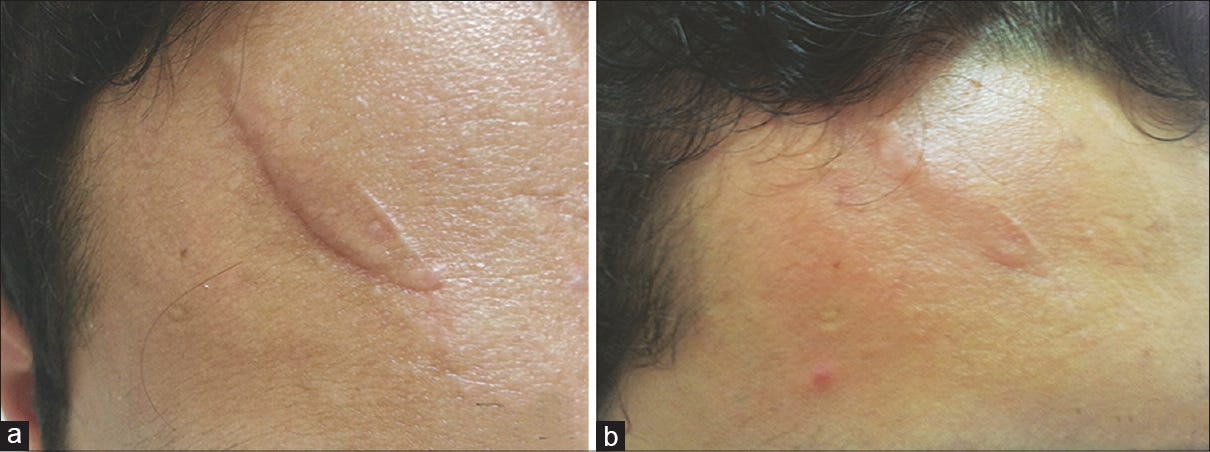
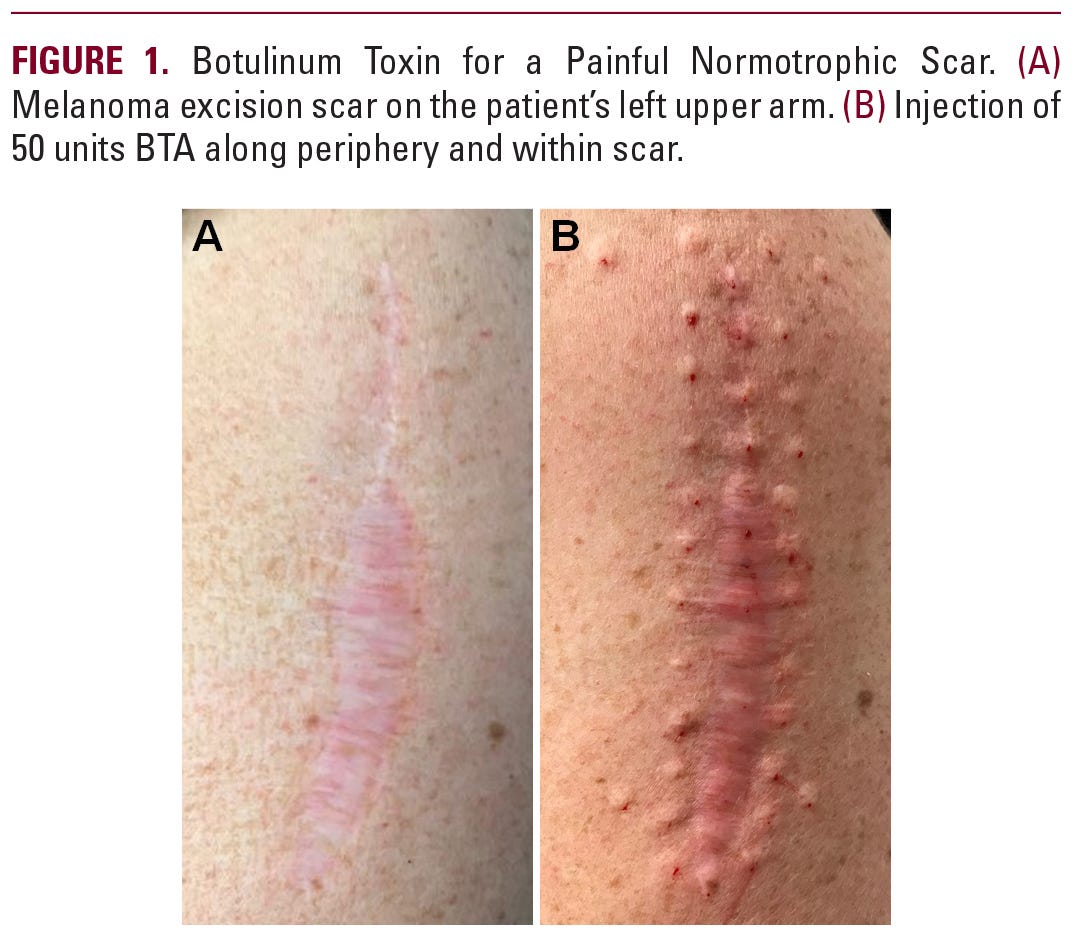
For an existing hypertrophic scar, keloid, or scar with a poor cosmetic appearance, Botox has also been studied using shallow injections into the dermis or directly into the scar itself.
Researchers are interested not only in the resulting muscle relaxation, but also in Botox’s potential direct effects on fibroblasts, collagen production, inflammation, and symptoms such as itching and pain during that scar remodeling phase.
Am I Out of a Job?
No. In all seriousness, this is largely an early-intervention option for a very specific aspect of scarring, particularly for people who expect to heal poorly based on past results or genetic predisposition.
If anything, this may give us another option for treating problematic scars, kinda like steroid injections.
Does it take away the need for pigment replacement, or scar lightening? In most cases, no.
There is also an important shortcoming in the research: the populations studied have not been diverse. At all.
Much of the published research touting its success has involved Asian populations, with considerably less evidence involving Caucasian skin. Earlier reviews even noted an absence of participants of African ethnicity.
So while the results are looking promising, can we assume those same results apply equally across all skin types and ethnicities? What about Black and Hispanic patients, as these are the populations already at greater risk for hypertrophic scarring and keloids?
Another limitation? Scar location.
While there has been some expansion of the original study, the majority of treatments have still been on facial and neck scars, as well as scars following procedures such as Mohs surgery and thyroidectomy.
*As of 2026, Botox is not currently FDA-approved for scar prevention or treatment, but is still considered a promising off-label option. Studies have shown some impressive results, BUT research is still in the works, particularly when it comes to scars on the body and a broader range of skin tones.