

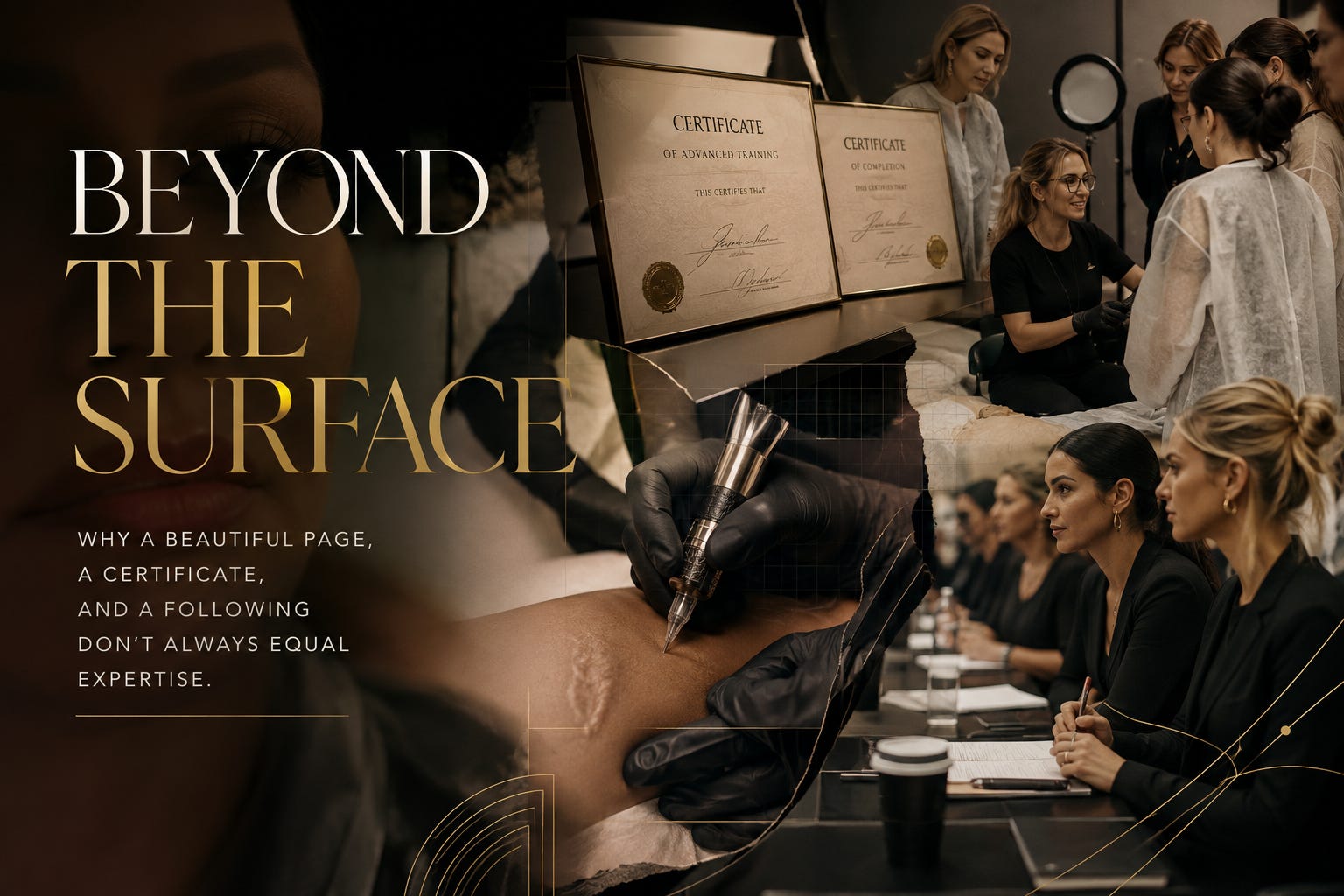
Recently, I made a carousel post on how to select a trainer to learn scar camouflage from. It got me thinking about just how easily fooled some people are by a high follower count or an aesthetically pleasing social media page… as if that equates to being an authority in your industry.
This isn’t an issue unique to only scar tattooing training. It applies to most services that people can sign up to learn over the course of a few days and then be released into the wild to perform on unsuspecting clients.
The lack of foundational knowledge or any type of background in an (at least!) somewhat related field is alarming.
That’s not to say someone needs to be an esthetician, nurse, tattoo artist, or have another very specific professional background before learning these services. However, it does mean that if you don’t already have that foundation, you need to recognize the gaps in your knowledge …and be willing to fill them.
A two- or five-day course can teach you a basic how-to. It cannot possibly teach you everything there is to know about skin, wound healing, infection control, ingredients, contraindications, machine mechanics, technique, or how to recognize when something simply isn’t working the way it should.
I was reminded of this recently when I heard a trainee asking for advice about inkless stretch mark treatment she was already offering. She had been using witch hazel as her working solution, as instructed in her previous training, and couldn’t understand why her needle kept snagging on the skin.

Witch hazel is an astringent. It isn’t a serum. While some formulations can contain hydrating ingredients, it offers no meaningful benefit to a stretch mark treatment, and, more importantly, it provides none of the lubrication needed for the cartridge to appropriately glide across the skin. She didn’t know she needed to change products expeditiously; she more so wanted a fix on how to prevent the needles from catching and repeatedly hurting the client.
While horrifying, the witch hazel really isn’t the point here.
The problem was that she knew the procedure she had been taught, but didn’t have the foundational knowledge to recognize why that was a terrible choice.
Bare minimum, you should be able to answer these two questions:
What effective topical ingredients are actually necessary for this treatment?
Why are they necessary?
And that is the difference between knowing the steps of a procedure and understanding the procedure you’re performing.
If you are a professional seeking additional certifications, research who you are learning from. Be wary of websites where even basic information (like the cost of training) is gatekept behind a form requiring all of your contact information, only for you to be immediately funneled into sales texts from a third party.
My other favorite tactic is when they try to create urgency and tell you there’s “One spot left!” and offer a made-up discount to snag that last opening. I’ve seen this a few times firsthand. You shouldn’t be pressured into believing some imaginary clock is ticking.
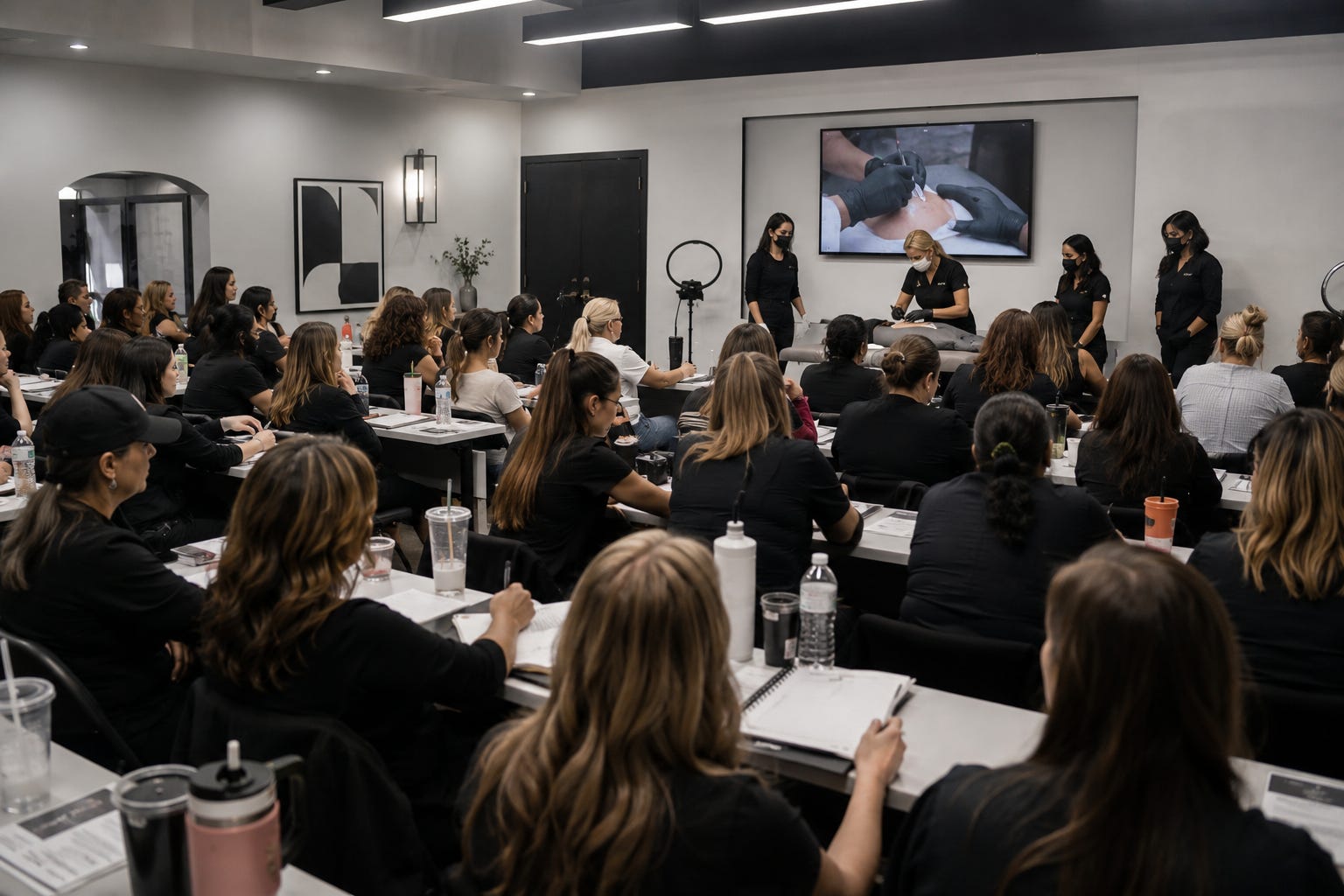
Too many programs are built around continually churning out large classes of newly certified practitioners because training is the real moneymaker.
When the financial incentive is to fill as many seats as possible, I think it’s fair to question how much emphasis is being placed on individual competency, mentorship, and what happens to those trainees once the course is over.
Education should create competent practitioners, not simply more of them.